Why Is My Dog Waking Me Up an Hour Early?
By: Leah Bornstein (CDBC, CSAT, FFCP, VSA-CDT)
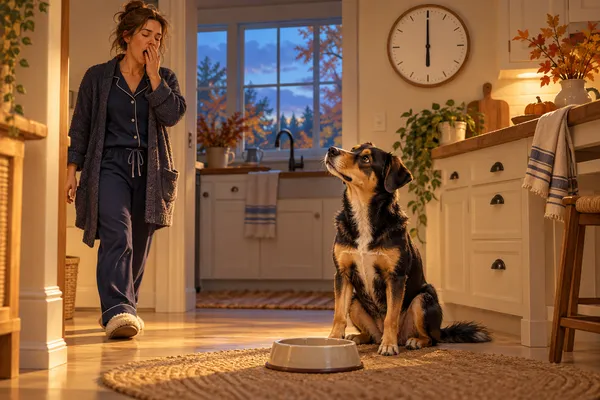
The clocks changed overnight. Your phone handled it automatically. Your dog, however, didn't receive the software update.
According to the clock, breakfast is still an hour away.
According to the dog standing beside your bed—breathing directly into your face—you are very, very late.
When daylight saving time ends, dogs may begin requesting meals, walks, bathroom breaks, or morning attention earlier than we expect. They are not being demanding or trying to overthrow the household schedule. Let's talk about how daylight savings affects them too!
Dogs Do Not Organize Their Lives by Clock Time
Dogs learn patterns.
Breakfast may happen after you turn on the kitchen light. A walk may follow your first cup of coffee. Dinner may arrive when the afternoon light begins to fade. Bedtime may start when the television turns off and you begin checking the locks.
These routines include time, but they also include daylight, household movement, hunger, bathroom needs, and countless environmental cues.
When the clocks change, some dogs may need more time to settle into the new schedule than others. In a 2025 study, sled dogs briefly shifted their activity when their handlers started arriving an hour later, while pet dogs showed no significant change in morning activity. The takeaway? Dogs don’t all respond to the time change in the same way—their daily routines may influence how they adapt. (Source: The Impact of Daylight Saving Time on Dog Activity)
You Don't Have to Change Everything Overnight
Many dogs will adjust without much help. Others may benefit from a gradual shift, especially if they are young, older, managing a medical condition, sensitive to routine changes, or extremely committed to punctual dining.
Try moving important activities by about 10 to 15 minutes at a time over several days:
Serve meals slightly closer to the new time
Shift walks and bathroom breaks gradually
Move bedtime and morning routines in small increments
Keep familiar cues around rest and settling
Allow an extra bathroom opportunity if your dog cannot comfortably wait
Gradual schedule changes are commonly recommended for helping dogs adapt to daylight saving time. (Source: How Does Daylight Saving Time Affect Dogs?)
This is not a contest to see whether your dog can hold out until the clock approves. If they urgently need to go outside, take them outside.
Earlier Darkness Changes the Walk Too
The fall time change affects more than breakfast.
A familiar evening walk may suddenly happen after dark. That can change what your dog sees and hears: headlights, flashlights, reflective decorations, people appearing from shadows, wildlife moving nearby, or dogs that are harder to spot until they are close.
For a worried or reactive dog, the same route may feel different than their regular walk.
You might walk earlier when possible, choose a better-lit route, shorten the outing, bring high-value food, or give your dog more distance from things that surprise them. Use visible gear for both ends of the leash without relying on equipment that flashes directly in your dog’s face.
If the earlier darkness is affecting your dog, the goal is not to convince your dog that darkness is harmless. It is to notice how the environment changed and adjust the plan accordingly.
Know When It Is More Than the Clock Change
A small schedule protest is different from a sudden or persistent behavior change.
Contact your veterinarian or a qualified positive reinforcement dog training professional if your dog begins waking repeatedly overnight, urgently needs to urinate, seems disoriented, cannot settle, is more reactive outside, pants or paces without an obvious reason, or shows changes in appetite, movement, digestion, or general behavior.
Don't change the timing of insulin, seizure medication, or other time-sensitive medication without speaking with your veterinarian.
If a routine change is bringing anxiety, reactivity, or difficulty settling to the surface, I can help you look at the whole pattern. You can schedule a free discovery call with Born to Be Dog Training to discuss individualized support.
Your dog is not looking at the clock and choosing chaos. Their body picked up a certain patterned schedule. The clocks changed on them. Giving them a little time (see what I did there? 😂) —and a clearer bridge to the new routine—is a pretty reasonable response.
This article provides general educational information and is not a substitute for veterinary diagnosis, treatment, or an individualized behavior assessment. Consult your veterinarian about sudden behavior changes, disrupted sleep, increased bathroom needs, disorientation, or medication timing.