What Should I Teach My Reactive Dog First?
By: Leah Bornstein (CDBC, CSAT, FFCP, VSA-CDT)
Your dog spots another dog coming around the corner.
You have approximately THREE seconds before things get LOUD.
So you ask for a sit. Then “watch me.” Maybe “leave it.” Meanwhile, the other dog keeps getting closer, your dog’s body gets tighter, and that treat you’re waving around may as well be a piece of lettuce. Sound familiar?
When guardians ask me what they should teach their reactive dog first, they often expect an obedience skill. And sometimes the most useful first skill is much simpler:
"Let’s get out of here!"
Your Dog May Need an Exit More Than a Job
Sitting still while something stressful approaches is incredibly difficult.
Imagine you’re afraid of spiders and someone carries a tarantula toward you. Now imagine being told to sit down, maintain eye contact, and ignore it.
Could you do it? Maybe.
Would you feel safer? Probably not.
Asking them to sit doesn’t change how they feel about the approaching dog, the narrow sidewalk, or the lack of space to move away—and in some cases, staying stationary can make that pressure feel even harder.
Creating distance creates safety.
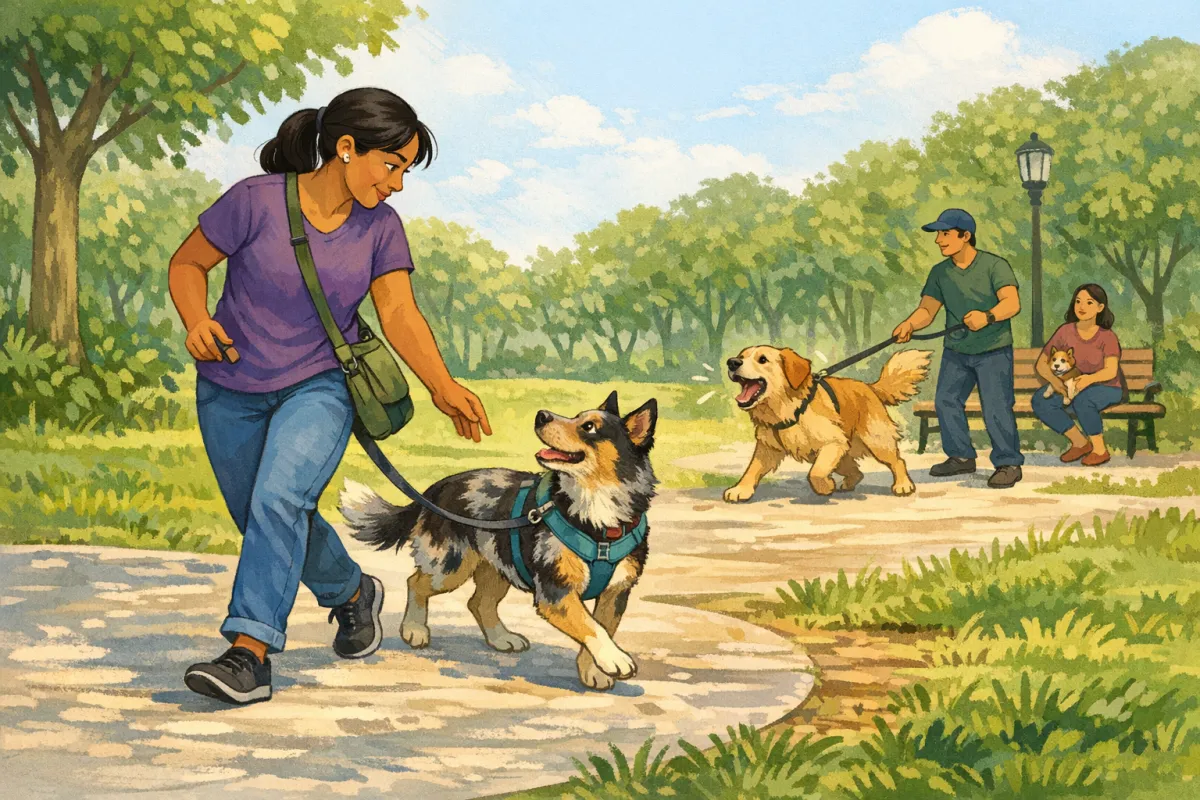
This is where an emergency U-turn—or what I often call “Let’s Go”—becomes so valuable. The cue tells your dog, “We’re moving away together.”
Management Is Part of the Training
Management means changing the situation so your dog doesn’t have to handle more than they’re currently capable of handling.
That may include crossing the street, turning down another block, waiting behind a parked car, or walking at a quieter time. Management isn’t giving up on training. It protects the work you’re already doing. And it protects your relationship. A dog who trusts their person to keep them safe is more likely to learn that they don’t have to manage every scary situation themselves.
The American Veterinary Society of Animal Behavior explains that management and training support each other: management helps prevent overwhelming encounters, while training helps the dog develop new emotional responses and skills. (AVSAB: Staying Safe—Management for Fearful Dogs)
If every walk repeatedly places your dog too close to their triggers, they keep practicing the barking, lunging, freezing, or frantic pulling you’re trying to change. A practiced exit gives you another option.
Teach It Before You Need It
Please don’t wait until an off-leash dog comes barreling toward you to introduce this skill.
Start inside your home, where nothing exciting is happening. Say “Let’s Go!” in a cheerful voice, turn in the opposite direction, and reward your dog for following you into another room. You can toss the treat in the direction you’re moving to make the turn even more rewarding.
Practice in different rooms. Then try the yard, driveway, or a quiet stretch of sidewalk. Keep it easy and fun!
The goal is for your dog to hear the cue and think, Oh! We're moving together!
Once the pattern is familiar, begin using it around mild distractions your dog can comfortably handle. That doesn’t mean testing it beside their biggest trigger. Build the skill gradually so it has a strong history before you need it during a harder moment.
Earlier Is Easier
An emergency turn works best when you use it early.
Look for the moment your dog notices the trigger—not the moment they’re already barking and lunging. Can they still respond to you? Move easily? Take food? Look away? Sniff?
Those details can help you decide whether there’s enough room for learning or whether you need to focus on leaving.
If your dog is already reacting, skip the repeated cues. Skip the forced sits. Skip the leash corrections. Create distance as safely and calmly as possible. They aren’t failing to listen. The situation may have become too difficult for them to process what you’re asking.
What About “Watch Me”?
Attention skills can absolutely be useful. So can hand targets, treat scatters, and other well-practiced behaviors.
And none of them should require your dog to remain uncomfortably close to a trigger.
I don’t want eye contact to become a test your dog has to pass when they're feeling triggered. Sometimes the most supportive response is to create distance first and train another day.
If walks feel like a constant cycle of scanning, bracing, and apologizing to strangers, you don’t have to sort through it alone. Schedule a free discovery call, and we can discuss what’s happening and whether individualized support would help.
Your dog doesn’t need perfect obedience in their hardest moment. They need a safe, familiar way out—and a human willing to take it with them.
This article provides general educational information and is not a substitute for an individualized behavior assessment or veterinary care. Seek qualified professional support for escalating behavior, bite risk, sudden behavior changes, or situations you cannot manage safely.