Visitors Are Coming: Are You and Your Dog Prepared?
Hosting guests already involves food, cleaning, and finding somewhere to hide those mounds of dirty laundry. And if your dog struggles with visitors, opening the front door can feel like a whole project all on it's own.
You want to enjoy your company...AND you want to help your dog feel comfortable. The good news it that a little preparation gives you fewer stressors to juggle at the doorstep.
TIP #1: Your dog doesn’t have to be the welcoming committee
I’d start by asking: “Does my dog NEED to greet anyone today?”
Wanting your dog to be part of the visit is completely valid. Thoughtful training can help build the skills and comfort needed for safe and enjoyable interactions.
Some dogs simply have too much stranger danger, and a comfortable visit might also mean resting away from guests during arrivals, or even throughout the visit. Being part of the family doesn’t require a job in hospitality.
TIP #2: Prepare a Zen Zone
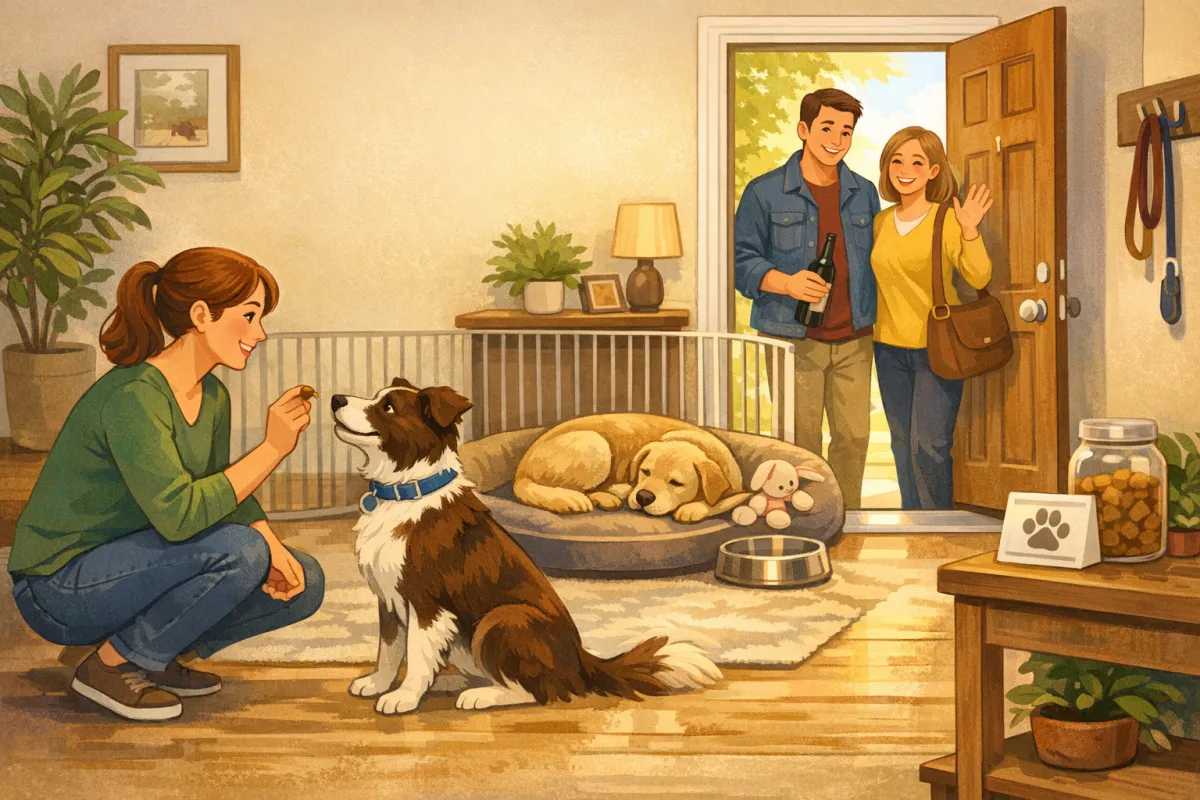
Choose a familiar, secure area away from arrival traffic, with water and comfortable bedding.
Try the arrangement beforehand:
Can your dog relax there?
Are doors or barriers secure?
Can guests leave the space undisturbed?
A closed door doesn’t automatically create comfort. If your dog panics when separated, scratches frantically, or attempts to escape, reconsider the setup. I wouldn’t introduce unfamiliar confinement just as company arrives (especially not for the first time!).
TIP #3: Brief the humans, too
Give guests simple instructions beforehand. That may be:
"Text when you arrive and wait to be let in." Knocks and doorbells can bring excitement or worry. A door sign can provide a great visual reminder! (We're all human, some people forget!).
"Do not approach Fido's crate (or designated Zen Zone)"
"Don’t call, reach toward, touch or feed the dog without asking"
"Let the dog rest without interruptions"
Enthusiasm is lovely! After all, I love a friend who loves my dog! And at the same time, some dogs find it more helpful to stick to a familiar greeting protocol.
SUPER IMPORTANT: Arrange active adult supervision whenever children share space with your dog. Otherwise, use secure separation your dog can comfortably tolerate. A child’s enthusiasm may be more than your dog feels comfortable with, even when everyone means well.
TIP #4: Manage arrivals. Practice skills separately.
Management means arranging the situation to prevent problems. Training means teaching skills through practice.
Have management -- secure gates, suitable barriers, and your arrival plan -- in place before opening the door. A bed or mat cue can help, although this is a skill that needs gradual practice before you depend on it during a real-world visit. Build duration, your distance from the dog, and distractions in controlled sessions first. Then gradually practice in more realistic situations as your dog is ready.
Your dinner party doesn’t need to become the final exam.
TIP #5: Keep greetings optional
Give your dog space and the option to move away. Avoid forcing interactions.
I also wouldn’t lure a hesitant dog toward someone with food. They may want the treat and still feel worried about the person offering it. That creates conflicting motivations: move closer for food, or keep a comfortable distance? That's the ultimate peer pressure!
Remind visitors that taking the treat doesn’t mean petting is welcome. In fact, I’d remove that pressure entirely rather than persuade the dog closer. If the arrangement isn’t working, change it. That may mean ending an interaction or shortening the visit.
What if you need a more specific support?
If your dog has bitten, snapped at visitors, or cannot be safely separated, get individualized guidance before attempting introductions. I help dog guardians build practical, humane plans for everyday life. If visits have become stressful, schedule a complimentary Zoom discovery call to discuss an appropriate next step.
This article is for general education only; it is not an individualized behavior plan or bite-risk assessment.