My Dog Has Never Done That Before!
When Sudden Aggression May Be A Medical Clue
By: Leah Bornstein (CDBC, CSAT, FFCP, VSA-CDT)
“My dog has NEVER done that before.”
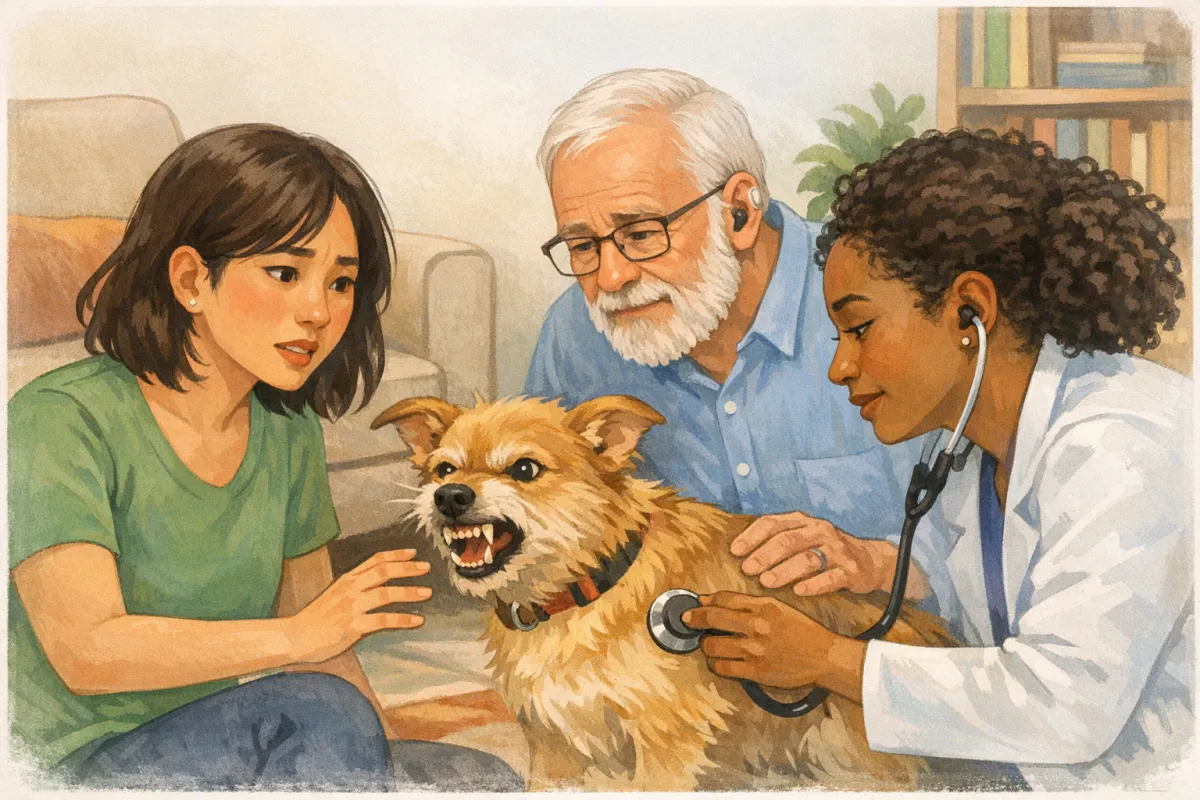
It’s a sentence I hear when a dog suddenly growls at someone they love, snaps when being moved off the couch, becomes uncomfortable around another dog in the home, or starts protesting handling that they previously appear to have tolerated.
And understandably, it can be scary.
When behavior changes suddenly, our brains want an explanation immediately. Is my dog becoming aggressive? Are they guarding me? Did I accidentally let them “get away with” something? Is this going to get worse? Maybe I'm too "soft" with them?
But before we decide what the behavior means, I want to ask a different question: What changed?
Behavior Doesn't Happen in a Vacuum
Growling, snapping, lunging, and biting describe what a dog did. They don't tell us why they did it.
Fear may contribute. Stress may contribute. A change in the household may matter. Resource guarding may be involved. Previous learning experiences may influence what the dog does next.
And sometimes, the missing piece is physical.
Veterinary behavior guidance specifically recommends ruling out medical contributors when behavior changes, with pain being an important consideration. (Source: Merck Veterinary Manual — Behavior Problems of Dogs)
That doesn't mean every growl equals arthritis, every snap equals an ear infection, or that we can diagnose pain by looking at behavior. It means behavior gives us information worth investigating.
Pain Doesn't Always Look Like Limping
I think this is where things get tricky.
When we picture a dog in pain, we may picture obvious signs: limping, crying, refusing to walk, or visibly guarding an injured leg. Dogs aren't always that obvious.
Pain or discomfort may show up alongside changes such as reluctance to move, difficulty getting comfortable, increased vigilance, changes in activity, sensitivity to touch, or uncharacteristic aggression. (Source: VCA Animal Hospitals — How Do I Know if My Dog Is in Pain?)
A dog who previously tolerated being scooted across the couch may growl when you reach toward them.
A dog who appeared to accept brushing may suddenly turn their head sharply toward the brush.
A dog who used to walk away from an annoying housemate may snap instead.
The behavior alone doesn't prove pain caused it. But a new behavior—especially one involving touch, movement, resting, grooming, or a sudden decrease in tolerance—is worth discussing with your veterinarian.
The American Veterinary Society of Animal Behavior also notes that painful conditions can fluctuate. Something a dog tolerates one day may be harder the next. (Source: AVSAB — Sudden Change in Your Dog's Behavior? He Could Be in Pain)
Suddenly, “But she was fine yesterday!” makes a little more sense.
Sometimes “Sudden” Has Been Building for a While
There’s another possibility worth considering: your dog may not have been completely comfortable all along.
Stress can accumulate, and dogs can eventually reach a point where something they previously managed becomes too much. At the same time, dogs often communicate discomfort long before they growl or snap.
A lip lick. A head turn. Showing the whites of the eyes—often called “whale eye.” Suddenly scratching. Moving away. Avoiding eye contact. Freezing or becoming still. These signals can have different meanings depending on the context, so one lip lick does not automatically mean your dog is distressed. But when several changes appear around a particular interaction, they are worth paying attention to. (Source: American Veterinary Society of Animal Behavior — Understanding Canine Facial Expressions and Body Postures)
I think of these body language signals as some of the quieter ways a dog can ask for a change: Can you give me a little more space? Can we stop doing this?
If those earlier signals don't change what is happening, some dogs may eventually communicate more loudly—with a growl, snarl, snap, or bite. Veterinary behavior guidance similarly emphasizes that subtle avoidance signals can precede escalation when a dog continues to feel threatened or uncomfortable. (Source: VCA Animal Hospitals — Behavior Counseling: Aggression Introduction)
We are a lot more likely to overlook a lip lick than a growl. An no one ignores a bite! Learning to notice and listen to those quieter signals gives us an opportunity to respond sooner so your dog doesn't need to ask in louder ways.
Don't Test It Again
After a frightening incident, there is a very human temptation to recreate the situation.
Let me touch his back again and see what happens.
Please don't.
If your dog growled when you tried to move them, you don't need a second growl to confirm that the first one happened. Instead, write down what you observed.
What happened immediately beforehand? Was your dog resting? Eating? Chewing something? Being touched? Were they startled? Had something unusual happened earlier that day? Have you noticed changes in appetite, sleep, movement, bathroom habits, grooming tolerance, activity, or interactions with people or animals?
Those details can be useful to both your veterinarian and behavior professional.
In the meantime, management matters. Give your dog space around situations that have already resulted in aggressive behavior rather than repeatedly putting them back into the same situation while you're figuring out what's happening. Veterinary guidance for aggression emphasizes preventing additional incidents while underlying contributors are investigated. (Source: VCA Animal Hospitals — Aggression Between Household Dogs: Diagnosis)
Management isn't giving in. It's prevention. It's safety. It's information gathering with a seatbelt on.
What if the Vet Finds Something?
Treating pain or another medical problem can be an important part of the solution—but it doesn't necessarily erase everything the dog learned while they were uncomfortable.
Imagine that having your shoulder touched hurt for three months. Eventually, you'd probably become pretty suspicious of hands approaching that shoulder.
Now imagine the pain is treated tomorrow. Your shoulder may feel better, but your brain still remembers, Hey, hands near there have historically been bad news.
Dogs can learn those associations too. Veterinary behavior guidance notes that fear surrounding previously painful interactions may persist even after the physical problem has improved. (Source: Merck Veterinary Manual — Behavior Problems of Dogs)
That's where veterinary care and behavior modification can complement one another!
Start With Curiosity
If your dog's behavior suddenly changes, you don't need to immediately decide that your dog has become “bad,” unpredictable, dominant, or aggressive.
You need more information.
Start with safety. Give them space. Document what you're seeing. Schedule a veterinary evaluation when a medical contributor may be possible. And if growling, snapping, biting, guarding, fear, or other concerning behavior continues, bring in a qualified behavior professional who can look at the entire picture with you.
If you're trying to make sense of a behavior change and aren't sure what to do next, you can schedule a free discovery call with Born to Be Dog Training. We'll talk about what you're seeing and whether personalized behavior support is the appropriate next step.
Sometimes the most useful question isn't, “How do I stop this behavior?”
It's: “What is my dog telling me has changed?”
This article provides general educational information and is not a substitute for veterinary diagnosis, treatment, or individualized behavior assessment. Aggression can create a risk of injury. Avoid deliberately provoking or recreating aggressive interactions to test your dog's response. Sudden behavior changes, suspected pain or illness, neurological signs, or other health concerns should be discussed with a veterinarian.
Sources and Further Reading
Merck Veterinary Manual — Behavior Problems of Dogs — peer-reviewed veterinary overview, reviewed and updated September 2025.
American Veterinary Society of Animal Behavior — Sudden Change in Your Dog's Behavior? He Could Be in Pain — veterinary behavior discussion of pain and behavior change, published July 25, 2020.
VCA Animal Hospitals — How Do I Know if My Dog Is in Pain? — overview of behavioral and physical signs associated with pain.
VCA Animal Hospitals — Aggression Between Household Dogs: Diagnosis — veterinary guidance on medical, environmental, and behavioral contributors to aggression.
American Veterinary Society of Animal Behavior — Understanding Canine Facial Expressions and Body Postures — discussion of subtle canine communication, including whale eye, looking away, and changes in facial expression and posture.
VCA Animal Hospitals — Behavior Counseling: Aggression Introduction — veterinary guidance on avoidance signals and escalation of aggressive communication.