Let's Look Beyond the Barking
By: Leah Bornstein (CDBC, CSAT, FFCP, VSA-CDT)
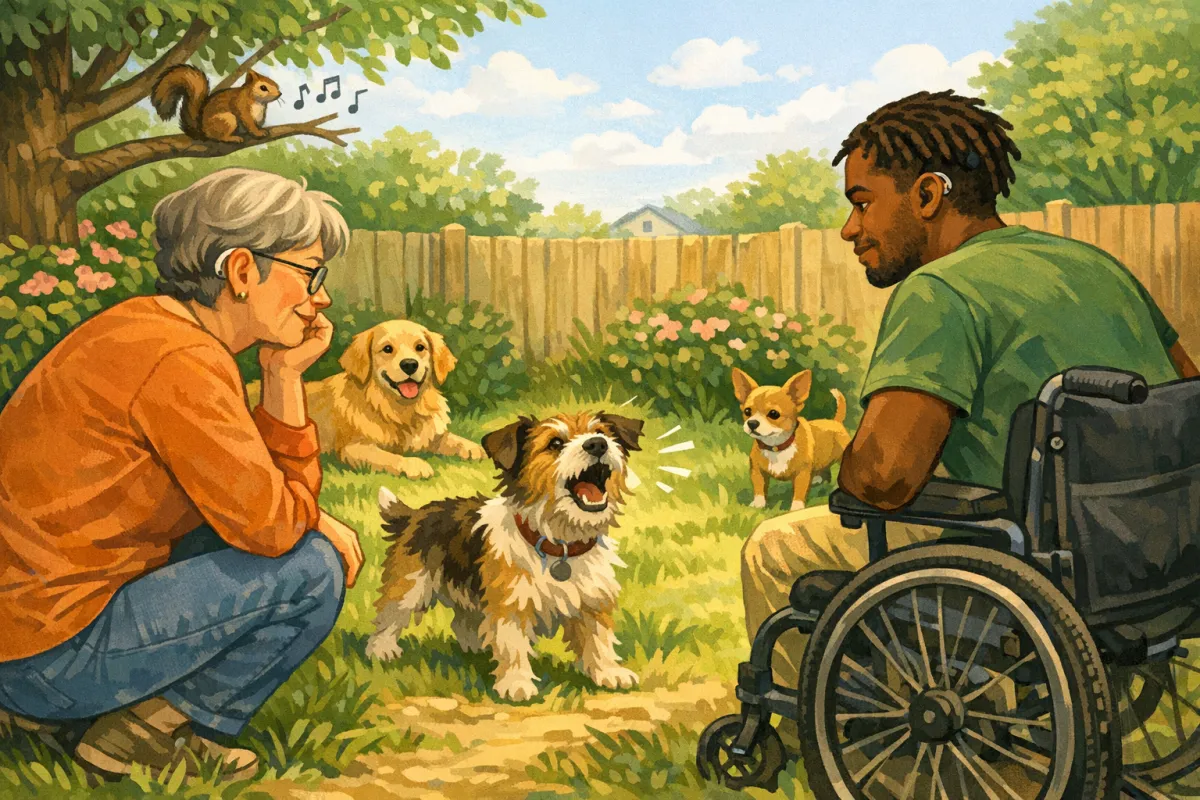
When your dog is barking at the window, on a walk, or every time someone visits, it’s understandable to want the noise to stop. Barking can be stressful, embarrassing, and loud enough to make you wonder whether your dog has secretly accepted a position in neighborhood security.
Of course, the barking itself is only one part of the story!
Dogs may bark because they’re worried, excited, frustrated, seeking interaction, responding to something in the environment, or trying to create more distance.
Barking is also a normal part of canine behavior, and some dogs are naturally more vocal than others. Breed tendencies, genetics, individual personality, health, and learning history may all influence barking. To understand what may help, it's important to always look at the full context.
CLUE #1: What Happened Before the Barking?
Start with what your dog noticed immediately before barking.
Was it:
A person approaching?
A dog across the street?
A delivery at the door?
A sound outside?
Someone reaching toward them?
The moment you began preparing to leave?
Are they bored and under-stimulated?
The trigger may be obvious. It may also be something you didn’t notice, such as a smell, a distant sound, or subtle movement. Look for patterns without deliberately putting your dog into a difficult situation. We’re gathering information, not conducting a surprise audition for Neighborhood Watch: Canine Edition.
CLUE #2: What Does the Rest of the Dog Tell You?
A bark doesn’t have one universal meaning. Look at your dog’s entire body. Notice their movement, posture, facial expression, breathing, and ability to disengage.
A dog barking with loose, wiggly movement may be experiencing something different from a dog whose body is stiff and frozen. Even then, body language must be considered together with the situation.
We can observe what the dog is doing. We shouldn’t claim to know exactly what they’re thinking from one behavior or short video. Context matters!
CLUE #3: What Happens Afterward?
The result of barking can influence whether it happens again. Imagine a dog barks at someone walking past the house. The person keeps walking. From the dog’s perspective, the barking may appear to have worked.
“Excellent. Threat handled. Where is my employee-of-the-month plaque?”
Your dog isn’t plotting against you. They may simply be repeating behavior that has produced a useful outcome before. Reinforcement drives learning and in some situations, barking can be self-reinforcing! The act of barking may feel satisfying, release energy, or become part of a well-practiced response.
This is where management can help. Blocking the view from a busy window, adding distance from a trigger, or changing the setup can reduce opportunities to rehearse the barking. Management prevents repeated practice. Training creates longer-term change by helping your dog feel safer or teaching them another response.
CLUE #4: What Else Is Happening in Your Dog’s Life?
Behavior doesn’t happen in a vacuum.
Consider changes in:
Health or physical comfort
Sleep and rest
Routine
Household activity
Opportunities for enrichment
Recent stressful or exciting events
Skills your dog has not learned yet
A dog who has already had a difficult morning may have less capacity to cope with the next challenge.
Physical discomfort can also reduce a dog’s tolerance for handling, noise, activity, proximity, or other situations they would normally manage more easily. If your dog’s behavior changes suddenly, seems unusual, or becomes more intense, speak with your veterinarian to explore whether pain, discomfort, or another health concern may be contributing.
CLUE #5: What Can You Make Easier Today?
Understanding the cause takes time. Management can help while you investigate. Depending on the situation, that might mean:
Blocking your dog’s view through a busy window
Creating more distance from a trigger
Using a quieter walking route
Giving your dog a comfortable space away from triggers
Use a brown noise or white noise machine
Providing an appropriate activity before a predictable challenge
Management isn’t giving up. It reduces practice of the unwanted behavior and gives everyone a little breathing room.
Your Next Step
Keep a short barking log for several days. Pay attention to what happened before the barking, what your dog did, what happened afterward, and how long it took them to settle.
If the barking involves intense fear, lunging, biting, guarding, or another safety concern, an individualized plan can help you understand what’s happening and choose appropriate next steps.
Schedule a complimentary discovery call to discuss your concerns and which service may be the best fit.
This article provides general educational information. It cannot replace an individual behavior assessment or veterinary advice.